Horse Racing Betting in the UK: A Data-Driven Guide
 Available in US
Table of Contents
- Why UK Horse Racing Betting Demands a Sharper Approach in 2026
- The Numbers, the Shifts, and What They Mean for Your Betting
- The UK Horse Racing Betting Market in Numbers
- Core Bet Types Every Punter Should Know
- How UK Horse Racing Odds Work
- What Separates a Good Bookmaker from a Great One
- Regulation, Affordability Checks, and What They Mean for You
- Building a Betting Approach That Lasts
- The UK Racing Calendar: When the Value Windows Open
- How the Levy System Funds British Racing
- Where the Market Is Heading: 2026 and Beyond
- Common Questions About Horse Racing Betting in the UK
By Horse Racing Betting Analyst
Why UK Horse Racing Betting Demands a Sharper Approach in 2026
I spent the first Saturday of this spring flat season doing something I rarely do — watching a race without a bet on. Not out of principle, but because my usual bookmaker account had been flagged for an affordability review the week before, and the replacement I’d opened was still verifying documents. Two licensed accounts, neither usable, and a ten-runner handicap at Newbury ticking toward the off. That small frustration captures something larger about where UK horse racing betting sits right now: the market is enormous, deeply embedded in British culture, and changing faster than most punters realise.
Horse racing generated £766.7 million in remote Gross Gambling Yield in the financial year ending March 2025, making it the second-largest online betting vertical after football. Those numbers are real — this is not a niche hobby confined to pensioners and tweed jackets. Yet turnover has been sliding, regulatory pressure is mounting, and a growing unlicensed market is reshaping the landscape month by month.
This guide exists because the old playbook — pick a bookie with a decent welcome offer, back a few fancies on a Saturday, hope for the best — no longer holds up. Whether you are placing your first each-way bet or re-evaluating a strategy you have used for years, the data tells a clear story: sharper punters who understand market structure, regulation, and value identification are the ones still standing. Everything that follows is built on that premise. I have spent eleven years analysing UK racing markets, and I will walk you through every layer — from how odds actually form to why the Levy Board matters to your bottom line — with the numbers to back it up.
What this guide will not do is tell you which bookmaker to choose or which horse to back next Saturday. That is not how lasting edge works. Instead, I will give you the framework to make those decisions yourself, grounded in market data rather than gut feeling.
The Numbers, the Shifts, and What They Mean for Your Betting
- UK horse racing generated £766.7 million in remote GGY in 2024/25, but turnover has dropped by an inflation-adjusted £3 billion since 2022 — the market is earning more from fewer, higher-margin bets.
- Affordability checks now trigger at £150 in net monthly deposits; 23.7% of regular punters have already been affected, and the threshold is unlikely to rise.
- Unlicensed betting site traffic has surged 522% since 2021, with an estimated £4.3 billion flowing outside the regulated market annually — stick with UKGC-licensed operators.
- Value exists in understanding market structure, not in chasing tips. Flat staking at 1-2% of bankroll, odds comparison across operators, and targeting races where liquidity matches your edge are the foundations that last.
The UK Horse Racing Betting Market in Numbers
A colleague of mine who trades commodities once asked me what the “total addressable market” for horse racing betting looked like. I pulled up the Gambling Commission’s annual report and watched his expression shift from polite curiosity to genuine surprise. Horse racing is not football, but it is not far off — and in some metrics, it punches harder than people expect.
Remote Horse Racing GGY
£766.7 million (FY 2024-25)
Total Remote Betting GGY
£2.6 billion — football leads at £1.3 billion, racing second
Industry Economic Contribution
£4.1 billion to UK economy
Jobs Supported
85,000 across the racing ecosystem
Annual Racecourse Attendance
5.031 million in 2025 — first time above 5 million since 2019
That £766.7 million GGY figure represents what licensed operators retained from horse racing bets after payouts. The total amount wagered — the turnover — is significantly larger, but it is the yield that funds the ecosystem. For context, the previous financial year produced £771.1 million, so the direction is essentially flat at the top-line yield level. Dig beneath the surface, though, and the picture grows more complex. Total remote betting GGY reached £2.6 billion, with football commanding roughly half. Horse racing’s share has been stable in absolute terms but is quietly losing ground as football and in-play markets expand.
The real story, however, sits on the turnover side. Online horse racing turnover has dropped by approximately £1.6 billion in nominal terms since 2022. Factor in inflation and the loss climbs to around £3 billion. That is not a blip — it is a structural shift. Fewer bets are being placed per race, average stakes on ordinary fixtures are falling, and the gap between Premier Fixtures and everyday cards is widening. Premier Fixture turnover per race actually grew by 1.1% in 2025, while Core Fixture turnover per race fell by 8.1%. The market is consolidating around marquee events.
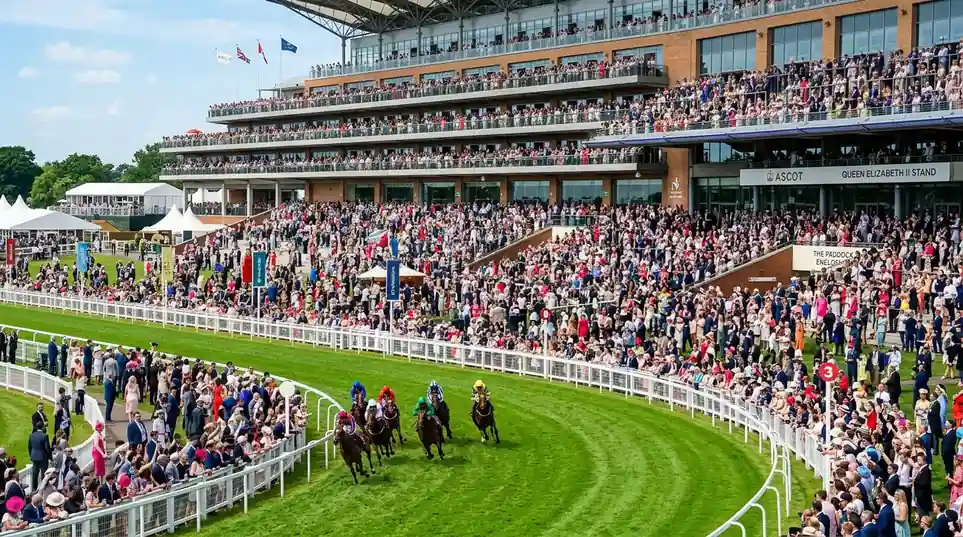
Racecourse attendance hit 5.031 million in 2025 — a 4.8% year-on-year rise and the highest figure since before the pandemic. More people are going racing, even as fewer of them are betting online.

The industry’s broader economic footprint is substantial. Direct revenues exceed £1.47 billion annually, with the total contribution to the UK economy estimated at £4.1 billion when indirect and induced effects are included. The sector supports 85,000 jobs, spanning trainers, stable staff, racecourse employees, and the betting shop workforce. That employment base is under pressure — the number of licensed betting shops has fallen to 5,825, a 22.8% drop from pre-pandemic levels — but the on-course and training yard workforce remains relatively stable.
For punters, these numbers matter for a practical reason. A shrinking betting market means thinner liquidity in weaker races, tighter margins for bookmakers, and a stronger incentive for operators to manage winning accounts aggressively. Understanding the market you are betting into is the first step toward navigating it effectively.
Those market-level numbers set the stage, but they do not tell you how to place a bet. The mechanics start with understanding what types of wagers exist — and which ones deserve your attention.
Core Bet Types Every Punter Should Know
The first horse racing bet I ever placed was a win single at Cheltenham, and I can still remember the confusion when someone next to me mentioned an “each-way” as though I should know what it meant. I did not. That gap between what experienced punters assume is common knowledge and what newcomers actually understand is wider than most people think — 68% of racecourse visitors in 2025 were casual or first-time attendees, many of them encountering these terms for the first time.
Here is an honest map of the core bet types. I am keeping this at overview level deliberately; if you want step-by-step mechanics, the beginner’s walkthrough covers the practical side in depth.
Win Single
The simplest bet in racing. You pick one horse, and it must finish first for you to collect. No frills, no safety net. Every other bet type is essentially a variation or combination of this one.
Each-Way
Two bets in one: a win bet and a place bet. If your horse wins, both parts pay out. If it finishes in a place position (typically top two, three, or four depending on field size), the place part pays at a fraction of the win odds — usually 1/4 or 1/5. This is the backbone of UK racing betting.
Accumulator
Multiple selections rolled into one bet. All must win for the bet to pay out, but the odds multiply together, creating large potential returns from small stakes. A four-fold accumulator at even money on each leg turns £1 into £16. The catch: one loser kills the entire bet.
Forecast and Tricast
Predicting the exact order of finish. A straight forecast requires naming first and second in order; a reverse forecast covers both permutations. A tricast demands first, second, and third in the correct sequence. Payouts can be enormous in large fields, but strike rates are brutal.
Place Terms — the conditions that determine how many positions qualify for the place portion of an each-way bet. Standard terms vary by field size: 1/4 odds for places in races with 5-7 runners (two places), 1/5 odds for handicaps with 12-15 runners (three places), and enhanced terms offered at festivals.
Beyond these fundamentals, the UK market offers a range of combination bets with names that sound like they belong in a card game. A Yankee is eleven bets across four selections (six doubles, four trebles, one four-fold). A Lucky 15 adds four singles to that structure, guaranteeing a return if just one selection wins. A Patent does the same across three selections. These combination bets are popular for a reason — they offer a middle ground between the all-or-nothing nature of accumulators and the lower returns of singles.
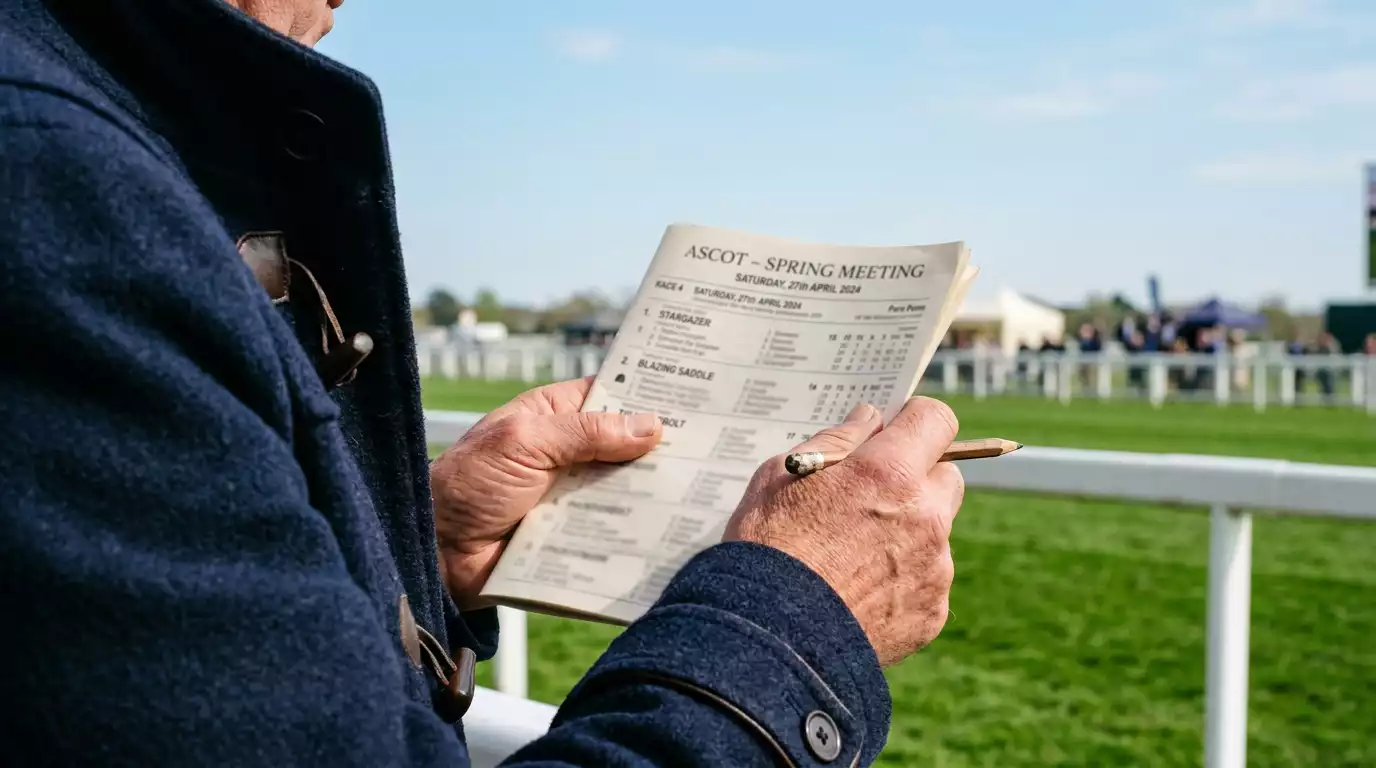
Then there is the distinction between fixed-odds betting and pool betting through the Tote. With fixed odds, the price you take is the price you get (subject to any Best Odds Guaranteed policy). With the Tote, your return depends on the total pool and how many other punters backed the same horse — a pari-mutuel system where the dividend is only known after the race. The Tote tends to offer better value on outsiders in large fields and worse value on short-priced favourites, because the pool is driven by public money that gravitates toward obvious choices.
One more category deserves mention: ante-post betting. These are wagers placed days, weeks, or even months before a race. Ante-post odds are typically more generous because you accept the risk of your horse being withdrawn without a refund. Trainers’ reports, gallop watchers, and stable confidence all feed into early market moves, and for the major festivals, ante-post markets can shift dramatically as race day approaches.
The bet type you choose should match both the race and your objective. A 5-runner Listed race at Ascot rewards win singles and forecasts. A 20-runner handicap at a Saturday meeting is where each-way value comes alive. Accumulators are entertainment with upside, not a strategy. That distinction matters more than most tipsters will tell you.
Knowing what to bet is only half the equation. The other half is understanding the price you are being offered — and whether it represents genuine value or just a number on a screen.
How UK Horse Racing Odds Work
I once watched a friend stare at “11/4” on a racecard for a solid thirty seconds before asking me whether that meant the horse had won eleven out of four races. It is a perfectly logical question if nobody has ever explained fractional odds, and it highlights why this topic trips people up. The notation is old, rooted in bookmaking tradition rather than mathematical clarity, and the UK stubbornly holds onto it while most of Europe has moved to decimals.
Fractional odds express your potential profit relative to your stake. At 11/4, a £4 bet returns £11 in profit plus your £4 stake back — £15 total. The number on the left is what you win; the number on the right is what you risk. At 2/1 (“two to one”), you win £2 for every £1 staked. At 1/2 (“one to two” or “odds-on”), you need to stake £2 to win £1. Any horse priced below evens (1/1) is odds-on, meaning the market believes it is more likely to win than not.
Fractional Odds Calculation
Horse priced at 7/2. Stake: £10.
Profit = (7 / 2) x £10 = £35
Total return = £35 + £10 = £45
Decimal odds, increasingly common on UK betting platforms, express the total return per unit staked rather than just the profit. The same 7/2 fractional price converts to 4.50 in decimal format — meaning a £10 bet returns £45 total. The conversion is straightforward: divide the fraction, then add 1. So 11/4 becomes (11 / 4) + 1 = 3.75. Decimals are mathematically cleaner, and they make comparing prices across races or bookmakers faster. I switched to using decimal displays about six years ago and never looked back.
Implied Probability — Every set of odds implies a probability that the horse will win. The formula for fractional odds is: denominator / (numerator + denominator). At 3/1, the implied probability is 1 / (3 + 1) = 25%. For decimal odds, divide 1 by the decimal: 1 / 4.00 = 25%. Comparing implied probability to your own assessment is the foundation of value betting. If you believe a horse has a 30% chance of winning and the market offers 25% implied probability, there is no value. If you assess 35%, there is.
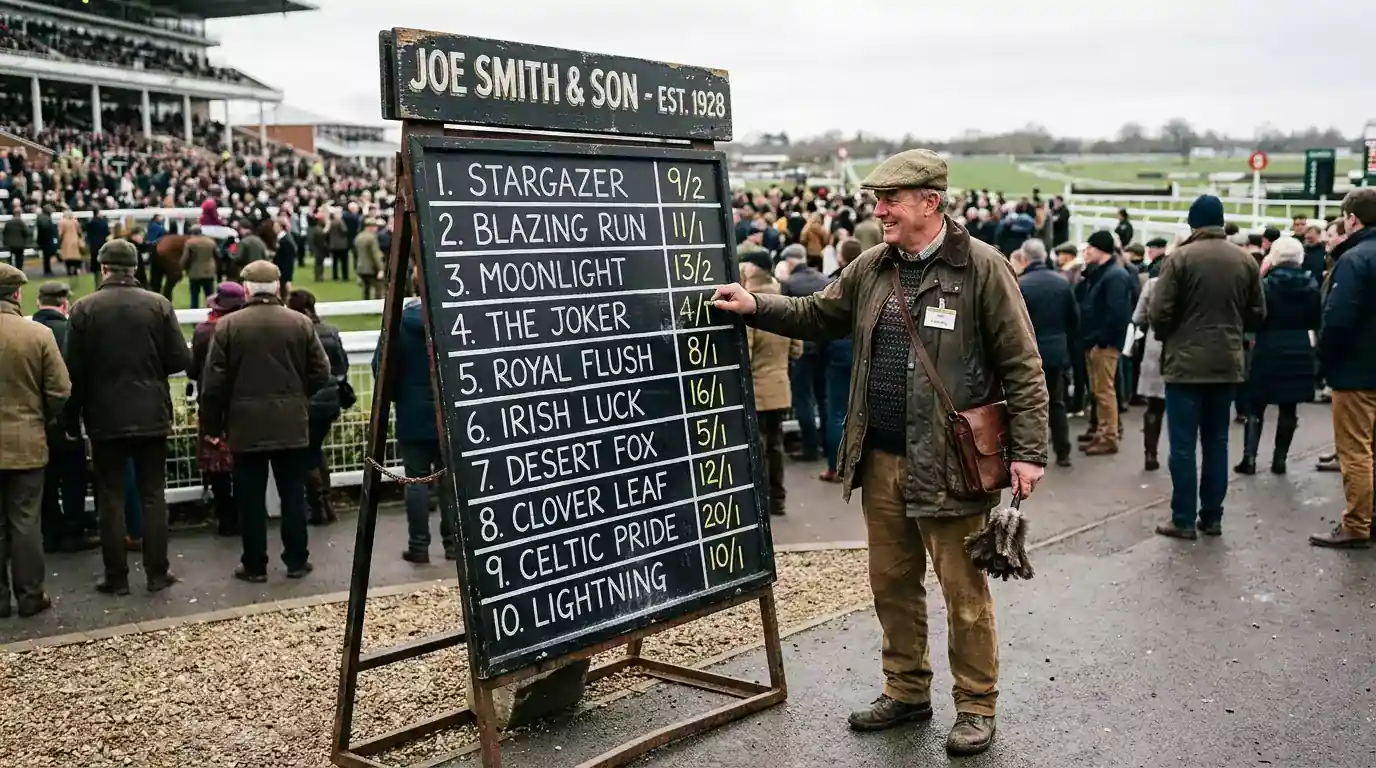
Then there is the Starting Price, or SP — the official odds at the moment the race begins. SP is determined by on-course bookmakers and serves as the industry benchmark for settling bets when no fixed price has been taken. If you place a bet “at SP,” you accept whatever the market settles on. Early prices — those available hours or days before a race — can differ substantially from SP, especially in competitive handicaps where late money reshapes the market. Watching how a horse’s price moves from morning to post time is one of the most useful skills a punter can develop. A horse drifting from 5/1 to 8/1 often signals negative information — a trainer’s doubts, poor paddock appearance, or significant money going elsewhere. A horse shortening from 10/1 to 6/1 suggests confidence from informed sources.
Market moves are not infallible, but they aggregate more information than any single punter can gather alone. For a deeper look at how these price signals work and how to convert them into practical decisions, the full odds breakdown covers every format, conversion method, and movement pattern in detail.
What Separates a Good Bookmaker from a Great One
Last autumn I opened accounts with three new licensed operators inside a fortnight — not for the welcome offers, but to compare racecard depth, speed of result settlement, and how each platform handled in-running price updates on midweek cards. Two were perfectly adequate. One was so far ahead in data presentation that I found myself gravitating there for every serious bet. The differences between bookmakers are real, and they compound over hundreds of bets into meaningful sums.
The online market remains crowded despite physical contraction on the high street. Dozens of UKGC-licensed operators compete for horse racing custom, and on the surface they look similar: fractional odds, each-way terms, a live streaming tab. Below the surface, the gaps are significant.
| Evaluation Criteria | What to Look For |
|---|---|
| Odds competitiveness | Consistent pricing across a full card, not just featured races. Check three or four midweek meetings, not just Saturday’s big race. |
| Each-way terms | Standard place fractions versus enhanced terms on selected races. Extra places on handicaps can shift expected value substantially. |
| Best Odds Guaranteed | Whether the policy applies to all UK and Irish racing or only selected meetings. Whether it covers ante-post prices. |
| Live streaming | Coverage breadth (all UK fixtures or selected ones), stream quality, and delay relative to off-course commentary. |
| Racecard depth | Form figures, trainer/jockey stats, going preferences, speed ratings. The best platforms integrate third-party data; the worst offer bare basics. |
| Settlement speed | How quickly winning bets are credited after the weigh-in. Minutes versus hours matters when you want to reinvest. |
A word on Best Odds Guaranteed, because it is one of the most misunderstood features in racing. BOG means that if you take an early price and the Starting Price is higher, you are paid at the better price. It sounds like free money — and in a sense, it is. But not all BOG policies are equal. Some cap the maximum enhancement; others exclude ante-post bets or certain meetings. Over a season of regular betting, a genuine no-cap BOG policy on all UK and Irish racing can add several percentage points to your return on investment. It is not a gimmick; it is a structural advantage.
Do
- Compare odds across three or more operators before taking a price on any serious bet. A half-point of odds on a £20 stake adds up fast across a season.
- Test customer support with a specific question before depositing. Ask about their BOG policy exceptions — the answer tells you how racing-focused they are.
- Check whether the operator offers detailed racecards with form, trainer statistics, and going history. Data quality reflects how seriously they treat the sport.
Don’t
- Choose a bookmaker based solely on the sign-up offer. The welcome bonus is spent in a week; odds quality and account longevity matter for years.
- Assume all UKGC-licensed operators treat racing equally. Some are football-first platforms where racing is an afterthought in terms of pricing and data.
- Ignore account restriction policies. Some operators are quicker to limit winning accounts than others, and this is a genuine concern for anyone who bets with any consistency.
The detailed bookmaker evaluation framework goes deeper into each of these criteria, including how to assess account restriction risk and what streaming coverage actually looks like across licensed platforms. For now, the core principle is this: the bookmaker you use is a tool, not a loyalty programme. Treat it accordingly.
Regulation, Affordability Checks, and What They Mean for You
If someone had told me five years ago that the biggest threat to my betting activity would come not from bad selections but from a regulatory review triggered by a £200 monthly deposit, I would have laughed. I am not laughing now. The regulatory environment around UK horse racing betting has shifted more dramatically in the past two years than in the previous two decades, and every punter — casual or serious — needs to understand what has changed and why it affects them directly.
The UK Gambling Commission, the body that licenses and supervises all legal gambling in Britain, operates under a framework designed to balance three objectives: keeping gambling crime-free, ensuring fairness, and protecting vulnerable people from harm. The third objective has increasingly dominated policy. Since February 2025, the threshold for enhanced affordability checks has been lowered from £500 to £150 in net monthly deposits. Cross that line and your operator may ask for payslips, bank statements, or other financial evidence before allowing you to continue betting. The checks are frictionless for some, deeply intrusive for others, and the racing industry’s response has been vocal.
The Racing Post’s Big Punting Survey found that 23.7% of respondents had been subjected to affordability checks in 2025 — up from 16.6% in 2023. More than 400 racing industry leaders signed an open letter to the government asking for the policy to be paused, and over 100,000 people signed a public petition that triggered a parliamentary debate. The checks remain in place.

Brant Dunshea, acting Chief Executive of the BHA, framed the concern plainly when he noted that regulations need to be balanced and proportionate, allowing those who bet safely on racing to do so without interruption. On the other side of the debate, Nevin Truesdale, former Chief Executive of the Jockey Club, was more direct, arguing that the Gambling Commission appears to want to reduce gambling to small-stakes participants only. Whatever your position, the practical reality is clear: if you bet regularly and your deposits exceed £150 per month with a single operator, be prepared for documentation requests.
What triggers an affordability check? The current UKGC guidance sets two thresholds. Light-touch checks begin at £150 in net deposits within a rolling 30-day period. Enhanced checks, requiring detailed financial evidence, kick in at £500 net deposits in 24 hours or £2,000 over 90 days. Operators can impose their own, stricter thresholds at any time.
The consequence nobody at the Commission predicted — or at least, did not prioritise — is the growth of the unlicensed market. Traffic to unlicensed betting sites offering horse racing wagers surged by 522% between August 2021 and September 2024. In the same period, licensed operators saw traffic grow by just 49%. By the first nine months of 2024, unlicensed sites were attracting around 600,000 unique UK visits per month. The Betting and Gaming Council estimates that 1.5 million UK residents now spend up to £4.3 billion annually on unregulated platforms. Grainne Hurst, CEO of the BGC, has pointed out that these operators pay no tax, contribute nothing to safer gambling, and fund none of the levy that sustains British racing.
The Commission is fighting back — 770 cease-and-desist orders issued, 264 illegal sites shut down, 102,000 URLs referred to Google for removal, and £26 million in additional Treasury funding earmarked for enforcement. But enforcement is a game of whack-a-mole when the underlying incentive — that frustrated bettors will seek fewer restrictions — remains intact.
For punters, the practical takeaway is straightforward. Stick with UKGC-licensed operators. The consumer protections are real: segregated funds, dispute resolution through an approved ADR body, self-exclusion tools, and a regulatory backstop if things go wrong. The affordability checks are an inconvenience, but they exist within a framework that also protects your money. Unlicensed sites offer none of that.
Building a Betting Approach That Lasts
Years ago, before I had any structured approach, I would walk into a betting shop on a Saturday with £50 and leave with either £120 or nothing. There was no middle ground because there was no system — just instinct and escalating stakes when instinct appeared to be working. The turning point came when I started treating my betting balance as a number to be managed rather than a sum to be spent. That shift, mundane as it sounds, is the dividing line between punters who survive long-term and those who quietly drift away.
Participation in horse racing betting fluctuates seasonally. Gambling Commission survey data shows that 4% of UK adults reported betting on racing in a four-week window during July-October 2025, dropping from 7% during the April-July period that covers Cheltenham and the Grand National. That swing tells you something important: the majority of racing bets are placed by seasonal or occasional punters, and the market is most efficient — hardest to beat — during peak festival periods when sharp money floods in alongside the casual stakes.
Before Placing Any Bet
- Define today’s total stake budget as a fixed amount you are prepared to lose entirely. Not “hoping to win back,” but genuinely writing off.
- Check the going report. Has it changed since declarations? If the ground has shifted from Good to Soft overnight, your assessment of every runner needs updating.
- Look at the non-runners. A withdrawn favourite can transform a competitive handicap into a one-horse race — or open up value on a horse that was previously ignored at bigger odds.
- Compare odds across at least two operators. If the price you are being offered implies a probability higher than your assessment, that is where value sits.
- Decide the bet type before selecting the stake. An each-way bet costs twice the unit stake; a Lucky 15 costs fifteen times. Know the outlay before you commit.
The concept of value is central to any sustainable approach. Value exists when the odds offered are greater than the true probability of the outcome. If you believe a horse has a 25% chance of winning (implied odds of 3/1) and you can back it at 4/1, you have a value bet. Over a large enough sample, consistently identifying and acting on positive expected value is how bankrolls grow rather than shrink. The difficulty, of course, is in the assessment — estimating true probability is the hard part, and nobody gets it right every time.
Expected Value Calculation
Suppose you assess a horse at 20% win probability. The bookmaker offers 6/1 (decimal 7.00).
Expected value per £1 staked = (0.20 x £7.00) – (0.80 x £1.00) = £1.40 – £0.80 = +£0.60
That is a positive expected value of 60p per pound staked — a strong theoretical edge. But “theoretical” is doing heavy lifting in that sentence. Your 20% probability estimate is itself uncertain. The value approach works over hundreds of bets, not over a single Saturday card.
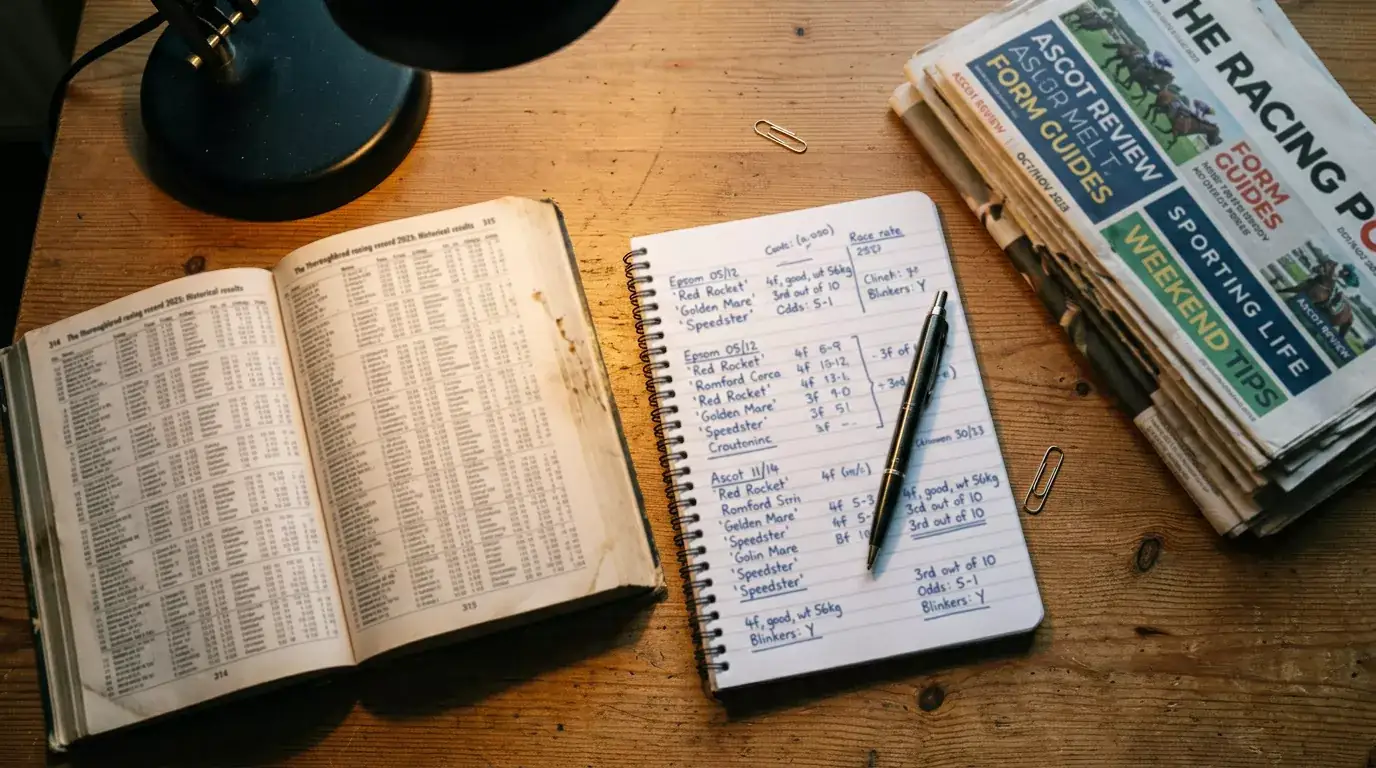
Staking discipline is the less glamorous half of strategy, but it is the half that keeps you solvent. Flat staking — betting the same amount on every selection regardless of confidence — is the simplest and most robust method. Percentage staking ties each bet to a proportion of your current bankroll, automatically scaling down after losses and up after wins. The Kelly Criterion offers a mathematically optimal staking formula based on your perceived edge and the odds, but it requires accurate probability estimates and can be aggressive in practice. For most punters, a flat stake of 1-2% of your total bankroll per bet is the sweet spot: enough to generate meaningful returns from winning runs without risking ruin during losing streaks.
None of this is complicated in theory. The difficulty is executing it consistently when you are three losers into a Saturday afternoon and a 12/1 shot in the last race looks tempting at double your normal stake. That is where discipline separates the approach from the intention.
The UK Racing Calendar: When the Value Windows Open
There are days when I stare at a card of three small meetings — a Monday at Plumpton, a wind-swept all-weather fixture at Wolverhampton, an afternoon at Catterick that even the trainers seem to have treated as a training exercise — and I close the laptop. Not every day is a betting day. The UK racing calendar runs nearly year-round, with over 1,500 fixtures annually, but the distribution of quality and liquidity is wildly uneven. Understanding when the market offers genuine opportunity and when it is just noise is one of the simplest edges available.
Spring: The Festival Season
Cheltenham in March and the Grand National meeting at Aintree in April are the twin peaks of the National Hunt calendar. The Grand National alone attracts roughly £250 million in bets, with over £200 million on the main race. Around 12 million people across the UK place a wager on the National each year, and approximately 82% of those bets are £5 or under — this is the one event where the entire country becomes a betting market. Liquidity is enormous, which paradoxically makes it harder for sharp punters to find mispriced runners because the weight of money tends to push favourites toward accurate pricing.
Summer: The Flat Takes Over
Royal Ascot in June marks the beginning of the premier flat season. The Derby at Epsom, the July Festival at Newmarket, Glorious Goodwood in late July — these meetings feature the best horses, the deepest fields, and the most competitive markets. For value seekers, the nursery handicap season starting in late summer offers opportunities in races where two-year-olds carry handicap marks for the first time and the form book is thin.
Autumn: The Overlap
September through November is the richest period on the calendar because both codes — flat and jumps — run simultaneously. Champions Day at Ascot closes the flat turf season, while the jumps season builds toward the early graded races. Ante-post markets for Cheltenham begin to take shape in October, and early prices can offer substantial value before the winter form emerges.
Winter: Jumps and All-Weather
The King George VI Chase at Kempton on Boxing Day is the centrepiece, but the real action for methodical punters is on the all-weather circuit. Lingfield, Kempton, Wolverhampton, and Newcastle provide consistent racing through the winter months, and the form tends to be more reliable on artificial surfaces where the going does not change with every rain shower.
The Grand National deserves a separate note because it occupies a unique position. It draws 700% more betting turnover than the Cheltenham Gold Cup, making it the single largest betting event in British racing. About 30% of Grand National bettors are placing their first wager in over a year — or their first ever. That seasonal influx of casual money creates specific dynamics: ante-post markets move more sharply on media coverage than on form analysis, and the each-way market in a 34-runner handicap steeplechase is the widest and deepest you will encounter all year. The Grand National betting guide covers the strategic detail in full.
The practical lesson is to match your activity to the calendar. Big festivals reward preparation; midweek cards at minor tracks reward specialists who know those courses inside out. Trying to bet on everything is the fastest route to mediocrity.
How the Levy System Funds British Racing
Most punters have never heard of the Horserace Betting Levy Board, and I completely understand why — it sounds like something from a government filing cabinet. But the levy is the financial umbilical cord between betting and racing in the UK, and what happens to it directly affects prize money, racecourse quality, and ultimately the product you are betting on.
The relationship between racing and betting in Britain stretches back over two centuries. As the European Commission itself noted in a 2017 state aid ruling, racing and betting in the UK share a unique interdependency — for most participants, a day at the races includes placing a bet on horse races. That interdependency is formalised through the levy: a statutory charge on bookmakers’ gross profits from horse racing, collected by the HBLB and redistributed to fund the sport.
How the Levy Works — Licensed bookmakers pay 10% of their gross profits from UK horse racing into the Levy Board fund. The Board then allocates this money to prize money, racecourse improvements, veterinary science, training and education, and breeding initiatives. The current arrangement replaced the old negotiated levy in 2017, when the government imposed a statutory framework to end years of acrimonious disputes between bookmakers and the racing authorities.
Levy Yield 2024/25
£108.9 million — highest since 2017
Levy Yield Trend
£100 million (2022/23) — £105 million (2023/24) — £109 million (2024/25)
HBLB Allocation 2026
£77.1 million to racing, including £4.4 million additional prize money
The levy yield reached £108.9 million in 2024/25, up from £105.3 million the previous year and the highest total since the statutory mechanism was introduced. The HBLB has committed £77.1 million to fund racing in 2026, including an extra £4.4 million in prize money. On the surface, that looks healthy. Below the surface, there is a paradox: the levy yield is rising even as betting turnover falls. This happens because the yield is based on gross profits (GGY), not on turnover. Bookmakers can earn the same or higher GGY from lower turnover if their margins widen — which is exactly what has been happening as competitive pricing pressures ease and fewer sharp punters are active in the market.
The tension is structural. Racing needs the levy to survive, but the levy is funded by betting activity that the industry’s own regulators are constraining. The average turnover on Core Fixtures fell 14.4% in the first quarter of 2025, and turnover per race on standard fixtures has been sliding year on year. If GGY margins stop widening — or if the unlicensed market continues growing and siphoning turnover that generates no levy at all — the funding model faces a genuine crunch. For punters, this matters because prize money drives horse population, which drives field sizes, which drives the quality and variety of races available to bet on. A shrinking levy ultimately means fewer horses, smaller fields, and a less interesting betting product.
Where the Market Is Heading: 2026 and Beyond
I sat in on an industry panel at the Cheltenham Festival this spring where a former bookmaker executive said something that stuck with me. He was discussing the affordability checks and said that his biggest concern is not that regulation is driving people away — it is how you get them back once they have left. That question hangs over the entire UK horse racing betting market right now, and there is no consensus answer.
The numbers paint a mixed picture. Total betting turnover on racing dropped 9% in the first quarter of 2025 compared to the same period in 2024. Richard Wayman, the BHA’s Director of Racing, acknowledged the decline and noted that while the racing product itself needs work to grow its appeal as a betting medium, a much wider range of factors is contributing to the trend. Over the first nine months of 2025, turnover fell 4.2% year on year and 12.8% against 2023. The horse population in training has contracted to 21,728 — a 2.3% drop from the previous year — which could mean smaller field sizes in the seasons ahead.
The November 2025 Budget brought some relief and some new pressure simultaneously. The Chancellor held the General Betting Duty for horse racing at 15%, resisting industry fears of harmonisation with online casino rates. Remote Gaming Duty, which applies to online casino and gaming, was raised to 40% from April 2026 — a move that will not directly hit racing bets but will squeeze operator margins across the wider gambling sector. Kevin Harrington, Flutter Entertainment’s UK and Ireland CEO, warned that the changes would hand a competitive advantage to unlicensed operators who bear none of the tax burden.
The BHA’s own modelling had shown that harmonising the betting duty to 21% across all gambling products would have cost the racing industry £66 million annually and threatened 2,752 jobs. The fact that the Treasury chose not to take that path is a political win for racing, but the broader trajectory remains challenging. The Gambling Commission’s affordability agenda is not going away, and the unlicensed market — now estimated by one analysis firm at 9% of total UK online gambling, generating approximately £379 million in gross gaming yield in the first half of 2025 alone — continues to expand.
There is an optimistic counternarrative, and it is not purely wishful thinking. The BHA’s Project Beacon audience research has identified over 25 million potential new fans who are currently disengaged from racing but match the demographic profile of existing racegoers. Brant Dunshea has described this as a vast untapped market with significant potential for growth. Turning casual viewers into regular bettors is the challenge — and it depends on a product that is accessible, entertaining, and not buried under regulatory friction.
From where I sit, the market in 2026 is bifurcating. Premier events — the festivals, the Classics, the big Saturday cards — are holding their value and in some cases growing. The everyday programme, especially midweek cards at minor tracks, is where turnover erosion hits hardest and where field sizes may start to shrink if prize money cannot keep pace. The variables ahead — regulatory policy, levy sustainability, unlicensed market enforcement, media rights, and demographic shifts — are all in play simultaneously. I do not have a crystal ball, but I have data, and the data says this: the punters who thrive will be the ones who pay attention to the market around the market, not just the horses on the track.
Common Questions About Horse Racing Betting in the UK
How do horse racing odds work in the UK?
UK horse racing odds are most commonly displayed in fractional format — for example, 5/1 means you win £5 for every £1 staked, plus your stake back. Decimal odds show total return per unit: 5/1 fractional equals 6.00 decimal. The odds reflect the bookmaker’s assessment of a horse’s chance of winning, with a margin built in. Starting Price (SP) is the official price at race time, determined by on-course bookmakers. If you take an early fixed price, that is the price you are locked into unless your operator offers Best Odds Guaranteed, which pays at whichever is higher.
What is each-way betting and when should I use it?
An each-way bet is two bets in one: a win bet and a place bet. If your horse wins, both parts pay. If it only places (finishes in the top two, three, or four depending on field size and terms), the place portion pays at a fraction of the win odds — typically 1/4 or 1/5. Each-way betting is most valuable in large-field handicaps where the place terms are generous and the odds are long enough that the place return alone covers your total outlay. In short races with small fields, win singles are usually more efficient.
How do I choose a reliable horse racing bookmaker?
Start with UKGC licensing — that is non-negotiable. Beyond that, compare odds competitiveness across a full card rather than just featured races. Check whether the operator offers Best Odds Guaranteed on all UK and Irish racing, look at racecard depth and data quality, and test the settlement speed after a winner. Also factor in the operator’s track record on account restrictions — some are far more aggressive than others at limiting winning accounts.
What is Best Odds Guaranteed (BOG)?
Best Odds Guaranteed is a policy where the bookmaker pays you at whichever price is higher: the early fixed price you took or the Starting Price at race time. If you back a horse at 8/1 in the morning and it drifts to 10/1 at the off, you receive 10/1. The policy varies between operators — some cap the maximum enhancement, others exclude certain meetings or ante-post bets. A robust BOG policy with no cap is one of the most valuable features a racing-focused bookmaker can offer.
Is horse racing betting legal and regulated in the UK?
Horse racing betting is fully legal in the UK and regulated by the UK Gambling Commission. All operators must hold a UKGC licence, which requires them to segregate customer funds, provide self-exclusion tools, and submit to regular compliance audits. The regulatory framework also mandates affordability checks on customers who deposit above certain thresholds — currently £150 net deposits within 30 days for light-touch checks. Betting with unlicensed operators is not illegal for the punter, but it forfeits all consumer protections.
How do I read a racecard before placing a bet?
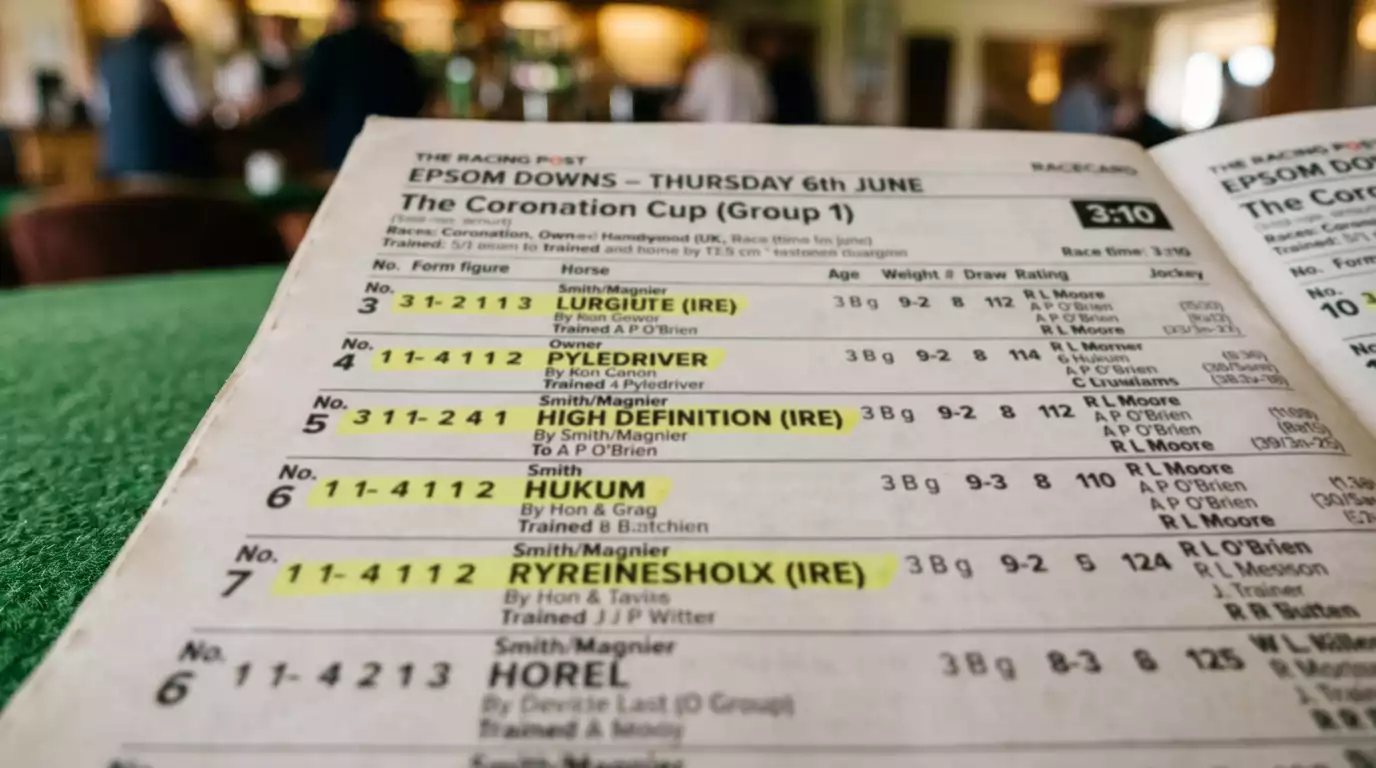
A racecard lists every runner in a race along with key information: the horse’s name, age, weight carried, draw position (in flat races), jockey, trainer, recent form figures, and sometimes official ratings. Form figures read left to right from oldest to newest — a sequence like 3-1-2 means the horse finished third, then first, then second in its last three runs. Letters indicate non-completions: F for fell, U for unseated, P for pulled up. Trainer and jockey strike rates, plus the horse’s record on the prevailing ground conditions, round out the essential data points.
What are the most common types of horse racing bets?
Win singles (backing one horse to finish first) and each-way bets are the most popular. Accumulators combine multiple selections into one bet with multiplied odds — all must win. Forecasts require predicting first and second in order, while tricasts demand the top three. Combination bets like Yankees (four selections, eleven bets) and Lucky 15s (four selections, fifteen bets including singles) offer coverage across multiple runners. Pool bets through the Tote work on a pari-mutuel basis where returns depend on how the total pool is shared among winning tickets.
Created by the ”Horse bet Racing” editorial team.